
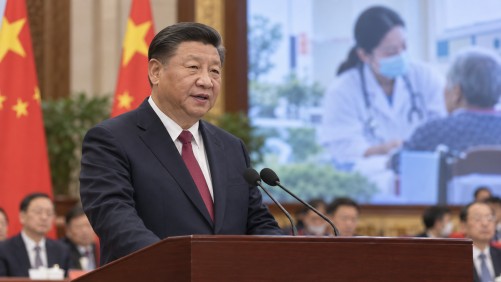
China is making strides in expanding healthcare access through its Healthy China Initiative, a comprehensive effort to enhance medical facilities and services across urban and rural areas. Under the leadership of President Xi Jinping, the initiative aims to improve healthcare access for China’s population of over 1.4 billion. A key focus is directing resources to community-level institutions to ensure equitable healthcare delivery.
During a visit to a township clinic in Jiangsu province in 2014, President Xi emphasized the need to upgrade local medical facilities and reduce the burdens associated with obtaining treatment. Since then, China has implemented reforms in hospital management, medical insurance, medicine supplies, and tiered medical services. These measures are designed to handle serious illnesses at provincial levels, common conditions within cities or counties, and routine issues at local facilities.
To address disparities in healthcare quality, China has established 125 national regional medical centers, particularly in central and western regions where advanced medical resources are lacking. Presently, over 90% of residents have access to medical services within a 15-minute radius, and primary-level institutions cater to more than half of all medical visits nationwide.
Preventive healthcare is also a priority, with initiatives targeting children’s health and age-related issues. Efforts to combat childhood myopia have led to a consistent decline in myopia rates among students, reaching 49.9% in 2025, a reduction from 2018 figures. The country’s average life expectancy has risen to 79.25 years, and there has been notable progress in controlling major infectious diseases and reducing chronic disease mortality rates.
Incorporating medical technology and pharmaceutical innovation is central to China’s strategy. The government is promoting digital healthcare, AI applications, and the development of domestic medicines and diagnostic technologies. In the first half of 2026 alone, 38 innovative drugs received approval, underscoring the focus on medical advancements.
Traditional Chinese medicine remains integral to healthcare, with efforts to modernize and promote international collaboration. This includes overseas medical teams and public health initiatives to combat infectious diseases. By 2035, China aims to align its healthcare system with broader modernization goals, addressing challenges related to service quality, affordability, and access amid an aging population with diverse healthcare needs.