
The United States and China are making concerted efforts to manage their intricate trading relationship amidst ongoing tensions in various strategic areas. Central to these efforts is the extension of the Busan agreement, a temporary accord that eases certain trade restrictions between the two global powerhouses. This extension, announced by U.S. Treasury Secretary Scott Bessent, will keep the agreement active until January 10, providing a much-needed pause in the economic friction between the two countries.
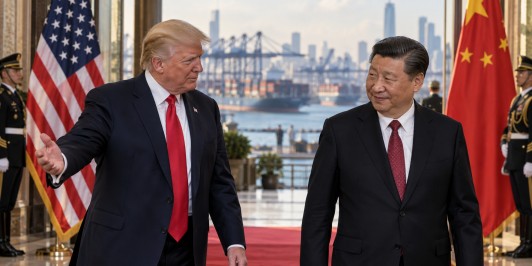
Against this backdrop of economic diplomacy, Chinese President Xi Jinping has embarked on a state visit to Washington, D.C., where he was met with an extraordinary reception by U.S. President Donald Trump. The welcoming ceremony, held at Joint Base Andrews, was marked by military honors, the display of national flags, and an impressive flyover by two U.S. B-1 bombers, underscoring the significance of Xi’s visit.
Throughout his two-day visit, President Xi is scheduled to engage in discussions with President Trump and other U.S. officials, with trade remaining a primary focus. The high-level meetings aim to address not only economic issues but also topics like artificial intelligence and technology, areas where both nations are vying to assert dominance.
The visit also includes a formal reception at the White House, where leaders are anticipated to seek pathways for managing their economic and strategic divergences while maintaining an open dialogue. This visit is particularly noteworthy given the ongoing competition between the U.S. and China over advancements in technology, especially in the realm of artificial intelligence.