
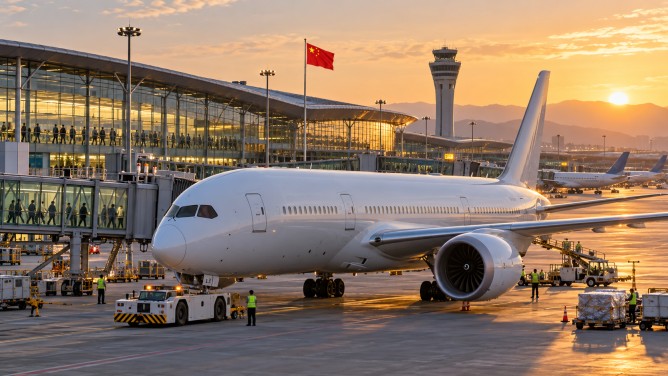
China is significantly expanding its international flight network in response to increasing demand for cross-border travel and inbound tourism. The new aviation schedule, announced by the Civil Aviation Administration of China, will be effective from October 25, 2026, to March 27, 2027. It includes an impressive 16,654 international passenger flights per week, connecting China with 84 countries.
This expansion sees increased flight frequencies across several key regions, such as Central Asia, South Asia, North America, Europe, Southeast Asia, and Latin America. Notably, flights between China and 17 countries, including India, Kazakhstan, Canada, and Belgium, have surged by more than 40 percent compared to the previous year. Additionally, new routes to destinations like Iceland, Madagascar, and Jordan are being introduced, broadening China’s international aviation network.
The drive to expand reflects a growing demand for travel to and from China, particularly with flight services connecting China to major inbound tourism markets such as Singapore and Malaysia, which have increased by 14.4 percent year-on-year. Major Chinese airlines are actively participating in this expansion. Air China is launching new services from Beijing to Reykjavik via Copenhagen and adding routes to Bali and Hanoi. Meanwhile, China Southern Airlines is expanding services to Jeju Island, Langkawi, and increasing flights to Australia and New Zealand.
Beijing Capital International Airport is also ramping up its international and regional operations, with an average of 252 passenger flights scheduled daily during the new season. Beijing Daxing International Airport plans to serve 44 international and regional destinations, further enhancing connectivity.
In addition to international routes, domestic aviation services are being bolstered with the introduction of 288 new routes connecting smaller cities and regional destinations with major economic centers. This includes popular winter tourism destinations such as Yanji in Jilin province and Altay in Xinjiang, which have seen a rise in flight bookings.
Overall, 216 Chinese and international airlines are set to operate approximately 116,000 passenger and cargo flights weekly during the winter-spring season. China revises its airline schedules twice a year to accommodate seasonal travel demand, optimize flight operations, and strengthen domestic and international connectivity, thereby supporting tourism, business travel, and broader international exchanges.