
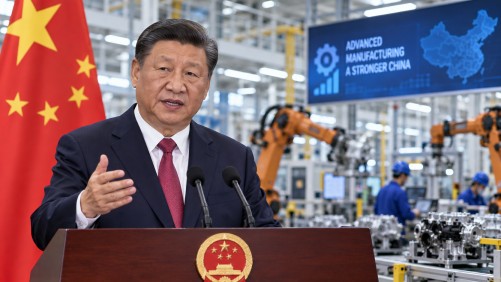
As China continues its journey towards modernization and economic development, the nation’s leadership has underscored the importance of advancing its manufacturing sector. President Xi Jinping has called for persistent efforts to enhance and expand China’s advanced manufacturing capabilities, identifying it as a pivotal element in the country’s broader industrial strategy.
In a recent address, Xi highlighted the need for high-quality, secure industrial growth, emphasizing the acceleration of smart, green, and integrated manufacturing processes. He also pointed out the necessity of strengthening domestic industrial supply chains to ensure their resilience and self-reliance amid external risks. This approach aligns with China’s goal of creating a modern industrial system centered around advanced manufacturing.
Complementing Xi’s vision, Premier Li Qiang stressed the integration of digital technologies and artificial intelligence into the manufacturing sector. He urged businesses to focus on digital and intelligent transformations, enhancing innovation and developing high-end manufacturing capabilities. Li also pointed to the significance of adopting green and low-carbon production methods and the creation of specialized manufacturing clusters that can drive industrial excellence.
Chinese authorities are not only focusing on technological advancements but also on improving industrial standards and stabilizing key supply chains. By addressing issues such as excessive competition, the government aims to create a more stable environment conducive to the growth of advanced manufacturing.
This strategic emphasis on advanced manufacturing reflects China’s commitment to fortifying its position as a global industrial leader while ensuring sustainable and resilient economic growth. As the nation pushes forward, the integration of modern technologies and a focus on self-reliance remain at the forefront of its industrial policy.