
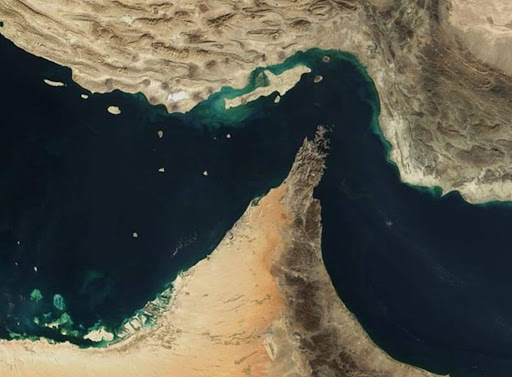
The Strait of Hormuz crisis is revealing a fundamental limitation of US unilateralism in the modern global energy order: Washington can call for allied action, but it cannot compel it — and the world’s most important oil shipping route can be shut down by a determined state actor even when the United States is actively trying to build a coalition to keep it open. President Trump posted on Truth Social claiming that many countries were already sending warships, but the UK, France, China, Japan, and South Korea have each made clear in their own ways that Trump’s timeline and Trump’s assertions do not determine their military decisions. The gap between American expectation and allied reality has rarely been more visible.
Iran’s blockade of the strait, launched in retaliation for US-Israeli airstrikes, has generated the most severe oil supply disruption in history. One-fifth of global oil exports ordinarily flow through the passage. Tehran has attacked sixteen tankers and declared vessels bound for American or allied ports to be legitimate military targets. The US itself has not deployed its own navy to escort tankers through the strait — a fact that compounds the credibility challenge of asking others to take that risk while America has not done so itself.
France refused outright to send ships while fighting continued. The UK explored lower-risk drone options. Japan described a very high deployment threshold. South Korea pledged careful deliberation. Germany questioned the EU’s Aspides mission’s effectiveness. No government committed forces. Each of these responses reflects a sovereign calculation that differs from Washington’s preferred outcome — a demonstration that US power to shape allied military decisions has limits that are particularly visible when the request involves deploying forces in an active conflict zone with no clear legal mandate or exit strategy.
The limitations of US influence are also visible in the economic dimension of the crisis. Despite Washington’s clear strategic interest in keeping the strait open, its inability to either deploy its own navy to escort tankers or to persuade allies to do so means that the economic consequences of the blockade continue to mount for American allies and trading partners. The surge in global oil prices driven by the crisis is affecting US allies in Europe and Asia in ways that complicate the broader geopolitical picture that Washington is trying to manage simultaneously.
China’s effectiveness as a diplomatic actor in this crisis stands in interesting contrast to the limits of US influence. As an Iranian ally and major oil consumer, Beijing has diplomatic tools available to it that Washington does not — and it is using them quietly and potentially effectively. The Chinese embassy confirmed China’s commitment to constructive regional engagement. US Energy Secretary Chris Wright expressed hope that China would prove a constructive partner, a remarkable implicit acknowledgment that resolving the crisis may depend at least partly on a country that Washington considers a strategic competitor rather than an ally.