
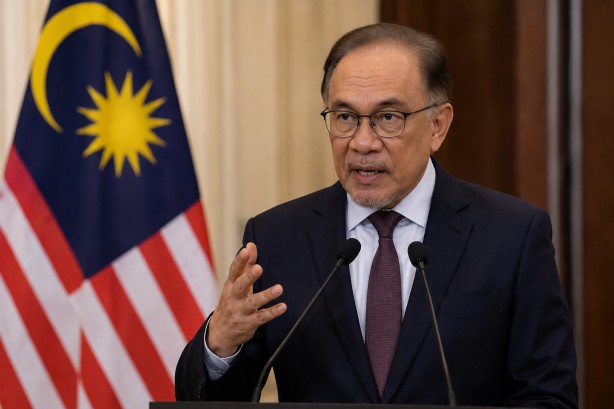
Malaysian Prime Minister Anwar Ibrahim has recently reignited discussions around Kuala Lumpur’s One China policy by asserting that Taiwan is a part of China. This statement has garnered approval from Beijing but was met with disapproval from Taipei. Despite the differing reactions, Anwar has emphasized Malaysia’s dedication to a peaceful resolution of any tensions between the two sides of the Taiwan Strait.
The roots of Malaysia’s One China policy can be traced back to 1974, when the country established diplomatic ties with Beijing. This policy involves Malaysia’s recognition of the People’s Republic of China as the sole legitimate government of China, alongside an acknowledgment of Beijing’s stance on Taiwan. Nonetheless, Malaysia maintains that ensuring peace and stability across the Taiwan Strait remains crucial.
Beijing expressed gratitude for Anwar’s comments, viewing them as aligning with its perspective on Taiwan. On the other hand, Taiwan rebuffed Anwar’s remarks, reiterating its position of not being part of China and cautioning that such statements could exacerbate concerns over military aggression.
While Malaysia does not maintain formal diplomatic relations with Taiwan, the two maintain significant economic, cultural, and technological connections through their respective representative offices. Anwar’s remarks could potentially influence Malaysia’s relationship with Taiwan, particularly affecting Taiwanese businesses and investors wary of geopolitical risks. Nevertheless, Malaysia is expected to continue navigating its strong ties with China while fostering ongoing economic interactions with Taiwan.
Trade between Malaysia and Taiwan was valued at US$54.49 billion in 2025, highlighting Taiwan’s role as one of Malaysia’s key trading partners. Despite the diplomatic disagreements, the substantial economic interests shared by both parties could serve as a foundation for continued collaboration.