
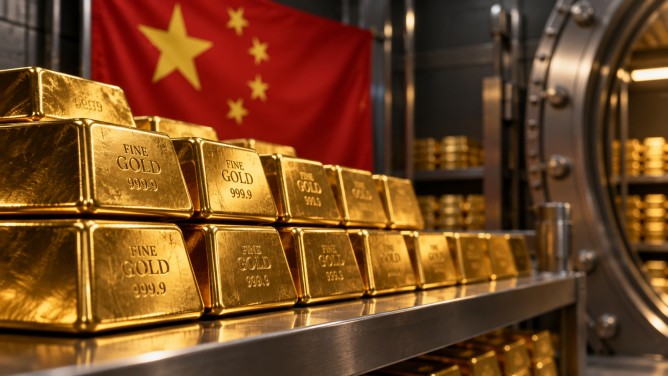
In a bid to bolster its financial resilience amid global uncertainties, China’s central bank has increased its gold reserves for the 23rd consecutive month. As of September, the People’s Bank of China reported a rise in its official gold holdings to 77.47 million ounces, up from 76.73 million ounces recorded in August. This gain of approximately 740,000 ounces follows an addition of 650,000 ounces the previous month.
This strategic move comes at a time when global gold prices are fluctuating, highlighting the role of gold in diversifying China’s reserves and providing a safeguard against international financial and geopolitical risks. Analysts suggest that these ongoing purchases are a component of China’s broader strategy to enhance the credibility of its currency and facilitate the gradual internationalization of the yuan.
Gold’s traditional use as a hedge against inflation is evolving, with central banks increasingly viewing it as a tool for managing financial and geopolitical risks. China’s consistent acquisition of gold is expected to continue as part of its comprehensive reserve management approach.
Meanwhile, China’s foreign exchange reserves have seen a decline, standing at $3.4003 trillion at the end of September, which is a decrease of $38.1 billion, or 1.11%, from the previous month. This reduction has been attributed to changes in exchange rates and the shifting prices of global financial assets, influenced by the broader economic environment and international monetary policies.
Despite this dip in foreign exchange reserves, Chinese authorities maintain that the country’s stable economic conditions provide a solid foundation for maintaining the overall stability of its reserves. As the global economic landscape continues to evolve, China’s strategic reserve management, including its emphasis on gold, remains a critical component of its economic policy.