
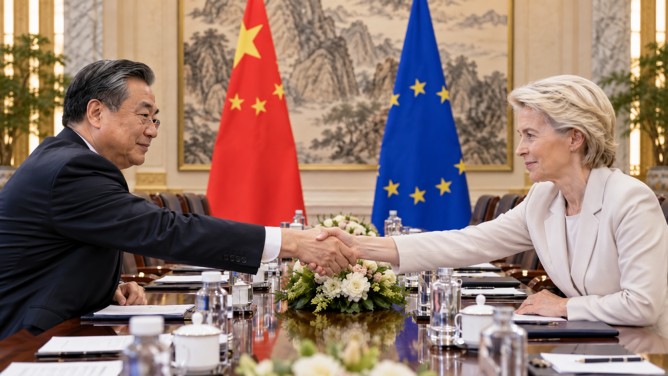
In a bid to enhance economic stability and improve trade relations, China and the European Union have agreed to advance dialogue and cooperation following comprehensive trade and investment consultations in Beijing. The high-level discussions, co-chaired by Chinese Commerce Minister Wang Wentao and European Commissioner for Trade and Economic Security Maroš Šefčovič, focused on addressing trade imbalances and enhancing mutual market access.
The consultations, which marked the second meeting of the China-EU trade and investment consultation mechanism, covered a wide array of topics including export controls, intellectual property rights, and the reform of the World Trade Organization (WTO). Both sides underscored the necessity of resolving economic differences constructively and maintaining stable economic relations.
Among the key issues addressed was the trade of electric vehicles, with China and the EU reviewing price commitments related to the EU’s anti-subsidy investigation into Chinese electric vehicles. They also agreed to continue discussions on export control concerns to facilitate compliant trade and ensure stable global supply chains.
The dialogue further explored potential tariff reductions on specific goods within the framework of WTO rules and sought to strengthen trade monitoring. Regulatory concerns in sectors such as pharmaceuticals, medical devices, cosmetics, and agricultural products were also part of the agenda, reflecting a mutual interest in creating fair and transparent business environments.
Additionally, both parties expressed a desire to expand cooperation in burgeoning fields such as artificial intelligence, renewable energy, digital services, and green technology. They emphasized opportunities for increased mutual investment and called for predictable business conditions for companies operating across each other’s markets.
The consultations concluded with a commitment to implement the agreed outcomes and continue negotiations. A ministerial-level video meeting is scheduled for January 2027, to be followed by the third trade and investment consultation meeting in March 2027, signaling an ongoing effort to foster economic collaboration and address existing challenges.