
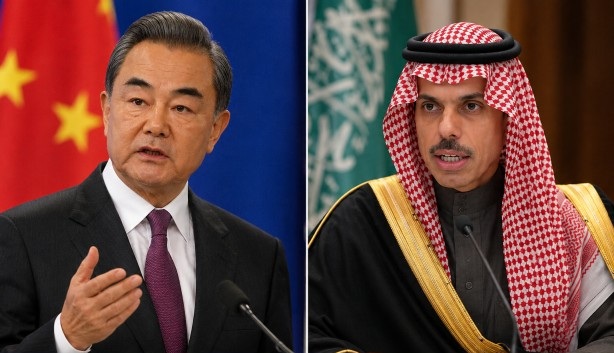
Amid rising tensions in the Middle East, China has urged the United States and Iran to persist with diplomatic discussions, emphasizing that dialogue remains the most effective method for addressing regional disputes. Chinese Foreign Minister Wang Yi cautioned that while the current ceasefire is delicate, negotiation is preferable to confrontation. He further indicated China’s willingness to collaborate with Saudi Arabia to mitigate tensions and promote enduring peace in the region.
In Beijing, during a meeting with Saudi Foreign Minister Prince Faisal bin Farhan, both ministers underscored the strategic importance of maintaining open passage through the Strait of Hormuz. This critical maritime route is vital for global energy distribution, as a considerable portion of the world’s oil and gas shipments navigate through this corridor. The recent disruptions in shipping due to heightened tensions between Iran and the United States have brought the issue of the Strait’s accessibility to the forefront of international discourse.
The discussions between Iran and the United States regarding reopening the Strait of Hormuz have gained urgency, given the significant impact on global trade. China, heavily reliant on energy imports from the Gulf region, consistently advocates for a non-violent resolution to these conflicts. Beijing’s call for peaceful negotiations reflects its broader strategic interests in maintaining stable energy supplies and fostering regional security.
In addition to security matters, the talks between China and Saudi Arabia also explored avenues for strengthening bilateral cooperation. Key areas of focus included enhancing trade, boosting investment, advancing energy projects, and developing technological and supply chain partnerships. Both nations are keen on reinforcing their economic ties while contributing to broader regional stability efforts.