
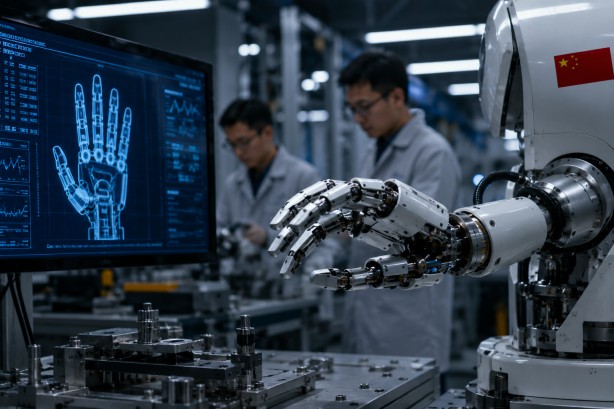
In China, the race to perfect robotic hands is intensifying as companies strive to overcome one of the most formidable challenges in humanoid robotics. These efforts are being spearheaded by startups leveraging the nation’s robust manufacturing sector and advancements in artificial intelligence to create robotic hands capable of executing intricate tasks. Such tasks include grasping objects, using tools, and managing a variety of everyday activities. This technology is anticipated to be pivotal in rendering humanoid robots practical for domestic, healthcare, and industrial applications.
Crafting a robotic hand that matches the human hand’s agility and precision poses a significant challenge, more so than constructing other parts of a humanoid robot. Developers are tasked with addressing both hardware and software challenges. This involves creating compact motors and sensors as well as developing software that allows robots to interpret touch, pressure, and execute complex movements. These advancements are crucial for the next generation of humanoid robots that can seamlessly integrate into human environments.
China’s status as a global frontrunner in robotics manufacturing is bolstered by its advanced supply chain and a government-supported emphasis on “embodied AI.” This focus has spurred a burgeoning robotics ecosystem in the country, leading to rapid innovations. Companies are developing not only sophisticated robotic hands but also wearable sensor gloves and AI systems that mimic human movements by collecting real-world data. This environment nurtures continuous enhancements in the field, positioning China at the forefront of robotics technology.
Experts in the field argue that enhancing the dexterity of robotic hands is a critical step toward building robots that can perform a wide spectrum of everyday tasks, from household chores to complex industrial operations and even advanced prosthetic applications. These improvements are seen as essential for integrating robots into various sectors, potentially revolutionizing the way humans interact with machines.
Industry leaders are optimistic that ongoing advancements in AI and robotics will eventually enable humanoid robots to function more intuitively alongside humans. This progress could unlock new opportunities in manufacturing, healthcare, and consumer services, transforming these sectors by introducing robots capable of operating in harmony with human counterparts. The pursuit of robotic hand dexterity is, therefore, not just a technological endeavor but a gateway to broader applications that could redefine our interaction with machines.