
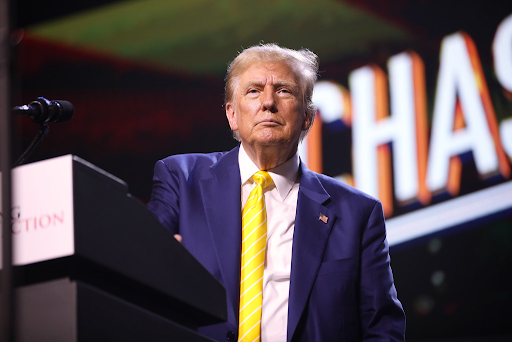
President Trump made clear Saturday that he has no intention of seeking congressional approval for his trade agenda, announcing a 15% global tariff under a separate legal authority just hours after the Supreme Court ruled that his previous approach required exactly the legislative backing he had never sought.
The new tariff relies on Section 122 of the Trade Act of 1974, which grants the president authority to impose tariffs of up to 15% for 150 days before congressional approval becomes mandatory. Trump described the provision as legally valid and effective immediately, posting the announcement on Truth Social with combative language aimed at both the Supreme Court and foreign trading partners.
The Supreme Court had determined 6-3 on Friday that Trump’s IEEPA-based tariffs overstepped presidential authority without legislative authorization. Trump dismissed the ruling as “ridiculous, poorly written, and extraordinarily anti-American,” and launched heated personal attacks on the justices who voted against him — including calling his own nominees Barrett and Gorsuch “an embarrassment to their families.”
International allies called for a return to predictability. Germany’s Chancellor Merz described the ongoing uncertainty as “poison” for economic planning and announced plans to visit Washington with a coordinated European position. France’s President Macron defended the role of judicial checks and balances and insisted that trade must be governed by fair, reciprocal rules rather than unilateral executive action.
With 90% of the $130 billion in tariffs collected under the now-invalidated IEEPA framework paid by US businesses and consumers, the new 15% rate promises to deepen domestic economic strain. Exemptions cover critical minerals, metals, pharmaceuticals, and USMCA-compliant goods from Canada and Mexico. The 150-day countdown has begun, and the administration has promised to use it wisely.