
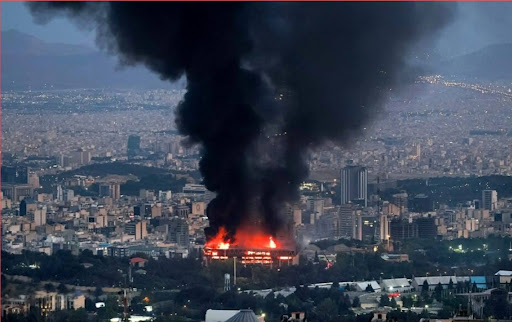
The global oil sector was bracing for worst-case scenarios on Saturday as the US-Iran war damaged or threatened every major energy hub in the Gulf simultaneously. The Strait of Hormuz remained closed, Kharg Island was being bombed for the second consecutive day, and Iranian missiles had struck Fujairah — one of the world’s most important ship-refuelling ports — forcing a suspension of oil-loading operations. The triple threat to global energy supply was unlike anything the industry had seen in modern times, and analysts were struggling to model the potential economic consequences.
Energy experts had already warned that oil prices could climb from their current level of around $120 per barrel to $150 if Kharg Island’s export capacity were fully destroyed. At Fujairah, the disruption added another layer of uncertainty to markets already stretched by the Hormuz closure. Iran’s military had threatened to strike any Gulf energy facility with American ties, leaving no node in the region’s energy infrastructure with a clear guarantee of safety. The cumulative risk to global oil and gas supply was pushing the conflict toward the status of a genuine global economic emergency.
President Trump said in public remarks that Kharg Island had been effectively demolished and threatened to destroy Iran’s remaining oil infrastructure if Tehran continued blocking the Strait of Hormuz. He called on China, France, Japan, South Korea, and the UK to send warships to help force the waterway open, acknowledging for the first time publicly that the US might need international support. The USS Tripoli and 2,500 additional marines were heading to the region. Trump ruled out negotiations, saying the terms were not yet acceptable.
Israel conducted dozens of airstrikes inside Iran, killing at least 15 people in Isfahan. Iran fired rockets at Israel in return. Iranian ballistic missiles struck Fujairah while Iranian commanders warned civilians near ports and US installations to evacuate. US Defence Secretary Pete Hegseth claimed Iran’s leadership was in hiding and wounded. Iranian officials confirmed Khamenei’s injury but called it minor. The International Crisis Group described Iran’s regime as intact and pursuing a long-term strategy of conflict and eventual negotiation.
The human and economic toll of the war was becoming impossible to contain. More than 1,400 Iranians had been killed in sustained bombing. Thirteen Israelis and roughly 20 Gulf residents had died. Lebanon’s crisis continued, with 800 killed and 850,000 displaced from Israeli strikes on Hezbollah. Six US troops died in an aircraft crash in Iraq. The US embassy in Baghdad was struck, and Americans in Iraq were ordered to leave. The oil sector’s worst fears were becoming a reality, and there was no clear path to reversing the damage.